
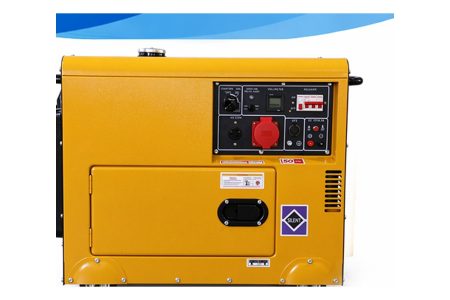
 Silent Type
CN04GF 3 kW Single-Cylinder Silent Diesel Generator Set
3 kW ≈ 3.8 kVA 110V
Model CN04GF · 178F engine · 70-75 dB(A) · 14 h continuous running
Factory direct price · reply within 24 hours
View Details
Ask any workshop in West or East Africa what actually kills small diesel generators and you will not hear “worn bearings”. You will hear about fuel — dirty fuel, wet fuel, or fuel that was not what it claimed to be.
In markets where fuel is distributed through a long chain of intermediaries, quality varies enormously between filling stations, and even between deliveries at the same station. A generator that runs perfectly in one installation fails repeatedly in another 200 metres away. The difference is usually the fuel drum, not the machine.
Water and heavy contaminants settle downward. Given time, most of the problem falls out of suspension. A settling tank — or simply storing drums upright for 24–48 hours before use and drawing from above the bottom — removes a large share of contamination before it reaches the expensive parts. Never draw from the bottom inch of a drum or tank.
A standard fuel filter traps particles but passes water. If your generator has only a single spin-on filter, adding an inline water separator is one of the highest-value modifications available. Many small sets already have a bowl-type filter — check it and drain the water layer every time you refuel.
An empty tank has air in it, and air carries moisture. A tank kept full has far less condensation. This is counterintuitive when fuel is expensive, but the cost of filling the tank is much lower than the cost of an injection pump rebuild.
The service manual gives a filter interval based on clean fuel. On variable-quality fuel, that interval is a ceiling, not a target. Inspect the filter bowl at every refuel and change filter elements sooner if you see contamination.
High-sulphur fuel degrades engine oil faster than the manual assumes. If oil analysis is not available, shortening the oil change interval is cheap insurance — oil costs far less than a set of bearings.
Not every small generator tolerates poor fuel equally well. Points worth checking:
When we ship small diesel generator sets to West and East Africa, we expect the fuel to be variable. Fuel system parts — injectors, lift pumps, filter assemblies — are stocked for every model in our range, and additional inline filtration can be specified at the order stage if your market needs it.
If you run generators somewhere with variable fuel quality and you are replacing injectors more often than you should be, tell us what you are seeing: set model, running hours, and what the filter bowl looks like. From those three things we can usually tell whether it is a fuel problem or a machine problem — and in our experience it is fuel far more often than not.
Silent Type
Model CN04GF · 178F engine · 70-75 dB(A) · 14 h continuous running
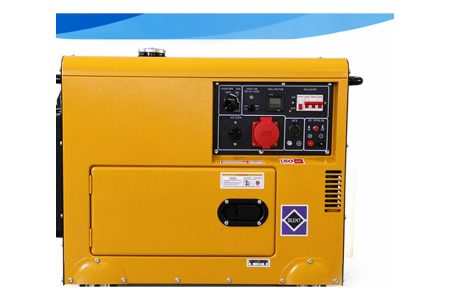 Silent Type
Model CN06GF · 188F engine · 70-75 dB(A) · 14 h continuous running
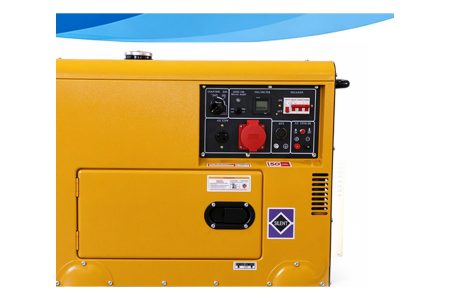 Silent Type
Model CN07GF · 190F engine · 70-75 dB(A) · 13 h continuous running
Send us your equipment list and site conditions, we will recommend a model.