Load Bank · 2026-10-28
Load Bank Voltage Derating: Why a 480 V Bank Cannot Deliver 1,000 kW at 380 V
A 1,000 kW load bank rated at 480 V does not deliver 1,000 kW at your site. Connect it to a 380 V generator and it delivers about 627 kW. This is not a fault, a limitation, or a marketing trick — it is Ohm’s law, and it invalidates more load tests than any other single factor.
The physics: power follows the square of voltage
Load bank elements are fixed resistors. For a fixed resistance, power dissipated is:
P = V² / R
Double the voltage and you quadruple the power. Halve it and you get a quarter. So the fraction of a bank’s rated capacity you actually get is the square of the ratio between the voltage you apply and the voltage it was rated at:
D = (V applied ÷ V rated)²
| Bank rated at |
Run at |
Derating factor |
1,000 kW bank delivers |
| 480 V |
480 V |
100% |
1,000 kW |
| 480 V |
400 V |
69% |
694 kW |
| 480 V |
380 V |
63% |
627 kW |
| 480 V |
240 V |
25% |
250 kW |
| 400 V |
380 V |
90% |
903 kW |
Look at the first three rows. A bank specified for the North American market and shipped to a 400 V site loses a third of its capability in transit. Nothing is broken. The paperwork said 1,000 kW and the paperwork was right — at 480 V.
Why this shows up in real orders
Load banks are commonly built for 480 V because that is the US industrial standard, and Chinese factories build to whichever voltage the largest market asks for. A buyer in Nigeria, Ghana, the UAE or Brazil sees a good price on a 480 V unit, compares it against a 400 V quote, and picks the cheaper one. The unit arrives, the commissioning engineer connects it to a 380 V generator, and the test tops out at 63% of rated load.
At that point there are three bad options: accept a partial test, hire a second bank, or rent a step-up transformer. All three cost more than the 400 V unit would have.
How to size correctly, in the right order
The mistake is treating voltage as a detail to confirm at the end. It is the first decision, because it determines the capacity you need to order.
- Read the actual site voltage from the generator nameplate — not the nominal grid voltage, the generator’s rated output voltage.
- Compute your target load in kW (see the kVA vs kW article).
- Divide by the derating factor for the bank you are considering: required rating = target kW ÷ D.
- Round up to the next standard size.
Worked example. A 500 kW generator at 380 V, full-load test, considering a 480 V bank:
- Target load: 500 kW
- D = (380 / 480)² = 0.627
- Required bank rating = 500 ÷ 0.627 = 798 kW
- Next standard size: 800 kW
So a 500 kW generator needs an 800 kW bank, if that bank is a 480 V unit. Compare that with a 400 V bank: D = (380/400)² = 0.903, required rating = 554 kW, next standard size 600 kW. The 600 kW 400 V unit costs less than the 800 kW 480 V one, and it is smaller and lighter to ship. Voltage matching pays for itself.
Three ways to handle a voltage mismatch
1. Buy the right voltage (always first choice)
Most Chinese load bank factories build to order and will supply 380, 400, 415, 440, 480, 600 or 690 V without a price premium. It costs nothing to specify correctly at the order stage and it is the only option that does not compromise the test.
2. Multi-voltage banks
A multi-tap bank has several element groups that can be reconnected in series or parallel to suit different voltages. Useful for rental fleets that move between sites. It costs 20–30% more than a single-voltage unit and adds a step of configuration that must be documented, or someone will connect it wrong.
3. Oversize deliberately
If you already own a 480 V bank and need to test 380 V generators, size the test to the derated capacity rather than pretending it is not happening. A 1,000 kW 480 V bank at 380 V is genuinely a 627 kW bank. Record that number in the test procedure so the next engineer does not repeat the discovery.
Altitude and temperature, briefly
Voltage is the big one, but not the only derating factor. Above about 1,000 m altitude, air density falls and forced-air cooling becomes less effective — apply 10–20% derating. High ambient temperature does the same: a bank rated at 40 °C ambient running at 50 °C needs derating or a high-ambient build. Cold sites need arctic packages for the contactors. If your site is a mine at 2,000 m in a hot climate, specify both, and tell the factory where the unit is going.
One number to remember
Before you sign a load bank purchase order, ask the supplier one question: “What is this bank’s delivered kW at my site voltage?” If they answer with the nameplate number and nothing else, apply D = (your voltage ÷ their voltage)² yourself, and see whether the answer still meets your test target. It takes thirty seconds and it prevents the most expensive mistake in this category.
Related reading
Related generator sets
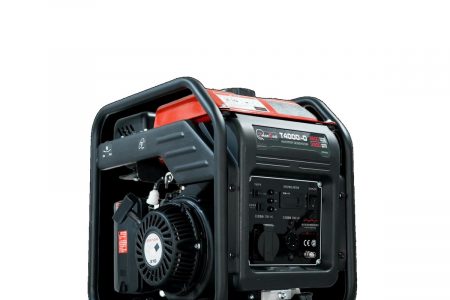 Gasoline Open
4.2 kW ≈ 4.2 kVA 230 V
Model T5500i-O · engine · 69 dB(A) at 7 m · 5 h at 50% load continuous running
Competitive export price · reply within 24 hours
View Details
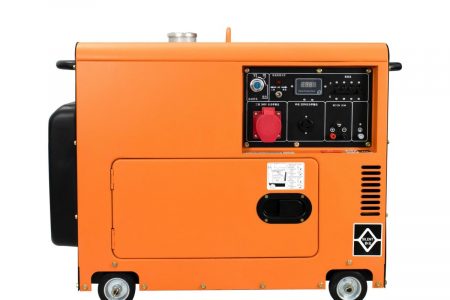 Silent Type
7 kW ≈ 8.8 kVA 220 V
Model 10000T · 192F engine · 72 dB(A) at 7 m · continuous running
Competitive export price · reply within 24 hours
View Details
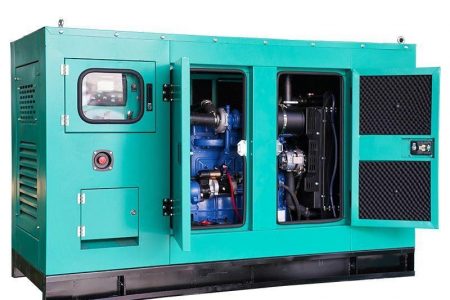 Silent Type
100 kW ≈ 125.0 kVA 220
Model T-100-X · engine · · continuous running
Competitive export price · reply within 24 hours
View Details