Load Bank · 2026-10-28
Resistive vs Reactive Load Banks: Which Test Do You Actually Need?
A load bank is not one product. It is two different tests wearing the same housing, and specifying the wrong type is how commissioning schedules slip. The distinction comes down to what you are trying to prove: that the engine can carry load, or that the alternator can hold voltage while it does.
The physics, in one paragraph
A resistive bank converts electricity into heat through metal resistor elements. Current and voltage stay in phase, so the power factor is 1.0 and every kilowatt the bank absorbs is real power (kW). A reactive bank adds inductors, which shift current behind voltage and absorb reactive power (kVAR) without doing work. A combined bank has both, and is specified at a target power factor — usually 0.8, because that is what real installations look like.
What each one actually tests
| Test |
Resistive only |
Combined (0.8 PF) |
| Engine reaches rated load |
Yes |
Yes |
| Fuel system delivers under load |
Yes |
Yes |
| Cooling and radiator capacity |
Yes |
Yes |
| Wet stacking cleared |
Yes |
Yes |
| Alternator excitation under reactive load |
No |
Yes |
| Voltage recovery after a step change |
No |
Yes |
| Behaviour with motor starting in the load |
No |
Yes |
That middle column is where projects get caught. A generator can pass a full resistive test at 100% and still stumble when a 200 kW motor starts across the line on site, because a resistive bank never asks the excitation system to do anything difficult. If your load is lighting, heating, resistive loads or a UPS with a clean input, resistive testing is a complete proof. If your load includes pumps, compressors, hoists, conveyors, HVAC or transformers, it is not.
Sizing a combined bank is not the same sum
This trips people up constantly. For a resistive bank, the capacity equals the load you want to apply: a 500 kW generator tested at 100% needs a 500 kW resistive bank.
For a combined bank at 0.8 PF, the bank’s kW rating equals the generator’s kW rating, but its total apparent capacity is higher, because the reactive portion rides on top. A 625 kVA generator (500 kW at 0.8 PF) needs a bank rated 500 kW at 0.8 PF — which in practice means a unit whose resistive element is around 500 kW and whose inductive element supplies roughly 375 kVAR.
The relationship:
- kVAR = kW × tan(arccos PF) — at 0.8 PF, that is kW × 0.75
- So 500 kW at 0.8 PF needs about 375 kVAR of inductance
- The combined unit’s apparent rating is 500 ÷ 0.8 = 625 kVA
Ask a supplier for “a 500 kW load bank” without specifying power factor and you will get a resistive unit, because that is cheaper and it is what the phrase usually means. Then the acceptance test specifying 0.8 PF cannot be performed.
What it costs you
Reactive capability is not free. As a rough guide from Chinese manufacturing, adding an inductive stage to a resistive bank increases the price by 40 to 70 percent for the same kW, because of the reactor cores, the extra switching, and the larger enclosure. On a 500 kW unit that is the difference between roughly 8,000 and 13,000 USD FOB.
The decision therefore depends entirely on the test specification. Check three things before you buy:
- Does the acceptance document state a power factor? If it says “full load at 0.8 PF lagging”, you need reactive. No exceptions.
- Is this a maintenance test or a commissioning test? Annual maintenance testing is almost always resistive. Commissioning, witness tests and factory acceptance tests frequently are not.
- What does the site load look like? A data centre full of UPS units presents a near-unity load, and a resistive test is honest. A water treatment plant full of pumps does not.
The practical answer for most buyers
If you are a generator rental company or a service workshop testing a mixed fleet, buy resistive first — it covers 80% of what you will ever be asked to do, it is cheaper, smaller and lighter, and it does not need the extra 30% of enclosure volume that reactors demand.
If you are a generator manufacturer doing factory acceptance tests, or you supply projects where the client’s engineer will read the test certificate, buy combined. You will not be able to retrofit reactive capability later at a sensible cost, and a resistive-only certificate will get rejected on a project that specified 0.8 PF.
One more thing people forget
A resistive bank can be used as a ballast load during normal operation, not just for testing. On sites where the connected load drops very low — a remote mine at night, a telecom site between call peaks — running a diesel set below about 30% load causes wet stacking and glazing. A permanently installed resistive bank that absorbs the surplus keeps the engine in its healthy band. Banks designed for this duty are built to run continuously, which is a different specification from a portable test unit.
Related reading
Related generator sets
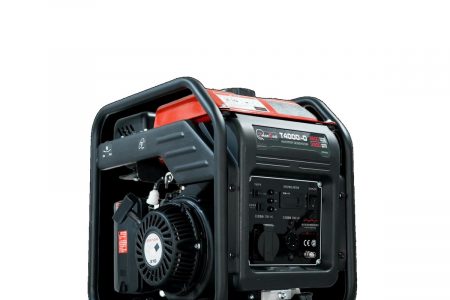 Gasoline Open
4.2 kW ≈ 4.2 kVA 230 V
Model T5500i-O · engine · 69 dB(A) at 7 m · 5 h at 50% load continuous running
Competitive export price · reply within 24 hours
View Details
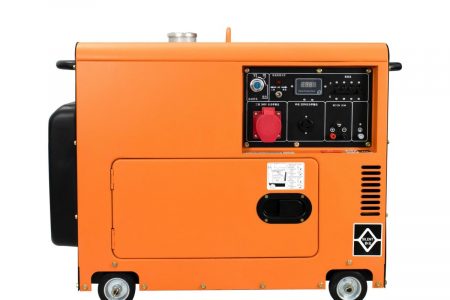 Silent Type
7 kW ≈ 8.8 kVA 220 V
Model 10000T · 192F engine · 72 dB(A) at 7 m · continuous running
Competitive export price · reply within 24 hours
View Details
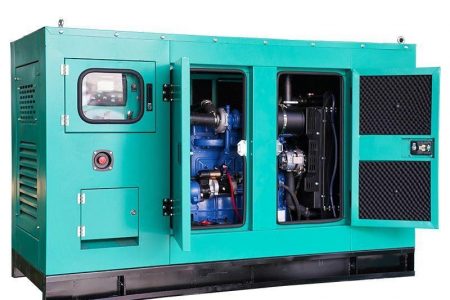 Silent Type
100 kW ≈ 125.0 kVA 220
Model T-100-X · engine · · continuous running
Competitive export price · reply within 24 hours
View Details