Load Bank · 2026-10-28
Wet Stacking in Diesel Generators: Why It Happens and How to Cure It
Wet stacking is the most common consequence of running a diesel generator the way most sites actually run it: lightly, briefly, and often. It is also entirely preventable, and a load bank is the tool that fixes it.
What is actually happening
Below roughly 30–40% of rated load, a diesel engine does not reach the cylinder temperature and exhaust temperature it was designed for. Two things follow:
- Incomplete combustion. Fuel injected into a cool cylinder does not fully burn. The unburnt portion leaves as visible black smoke, or worse, as partially oxidised tarry residue.
- Exhaust too cool to burn off deposits. A healthy diesel exhaust runs hot enough to keep the manifold and turbo clean. At low load it does not, so soot and unburnt fuel condense on the inside of the exhaust system instead of being carried out.
The result is a black, oily, unburnt-fuel deposit — “wet” stacking, as opposed to the dry soot that a hot engine produces. It accumulates in the exhaust manifold, the turbocharger turbine, the silencer and the pipework.
Why it matters more than it looks
Wet stacking is not cosmetic. In order of severity:
- Smoke on start-up. The first visible symptom, and the one that gets complaints from neighbours on a hospital or hotel site.
- Restricted exhaust. Deposit build-up increases back pressure. The engine loses power, exhaust temperature rises (because the restriction holds heat in), and fuel consumption climbs.
- Turbocharger damage. Unburnt fuel and soot coke onto the turbine blades and the bearing housing. Turbine imbalance, seal failure and oil contamination follow.
- Glazed cylinder bores. In severe chronic cases, the cylinder liners polish to a mirror finish and stop retaining oil film. Compression falls, oil consumption rises, and the engine needs a rebuild.
- Valve and injector fouling. Deposits on injector tips change the spray pattern, which makes combustion worse, which produces more deposits — a self-reinforcing loop.
Who is at risk
The pattern is specific, and it is not “old engines”:
- Standby sets tested unloaded. Monthly exercise at no load is the single largest cause. The set runs for thirty minutes, produces no useful heat, and stacks a little more each month.
- Oversized sets. A 250 kW set carrying a 40 kW site load runs at 16% forever. This is extremely common, because buyers size for motor starting surge rather than running load.
- Hotels, hospitals and telecom sites where the standby load is mostly lighting and electronics and the set never sees a heavy load.
- Rental sets returned from light-duty jobs — a set hired for a weekend event runs at 20% for three days.
The cure: load it properly, for long enough
Wet stacking is burned off, not cleaned off. The standard remedy is to run the set at 70–80% of rated load for two to four hours. At that load the exhaust reaches a temperature that oxidises the deposits and carries them out as fine ash.
Practical points:
- Do not go straight to 80%. Step up over 20–30 minutes so the deposits burn progressively rather than all at once. A heavy deposit releasing suddenly can block the turbo or start a silencer fire.
- Expect smoke to get worse before it gets better. The first 30 minutes at high load typically produce heavy black smoke as deposits burn. This is normal.
- Change the oil afterwards. Combustion by-products and soot that end up in the sump contaminate the oil. Treat the clean-out as a service event, not just a run.
- Inspect the turbo afterwards if the case was severe. Deposits that did not burn off may need mechanical cleaning.
The prevention: a load bank, and a policy
Two options, and they are not exclusive:
Portable load bank
Bring a bank to the site quarterly or annually and run the full profile. This is the standard approach for service companies and rental fleets. A 100–500 kW portable resistive bank covers most standby sets and can be moved between sites on a trailer.
Permanently installed bank
For sites where the standby load is structurally light — telecom huts, remote monitoring stations, small hospitals — fit a fixed resistive bank sized to the gap between the site load and 30% of the generator rating. Wire it through a contactor so it cuts in automatically when the site load is low, and the set always runs in its healthy band.
A fixed bank installed at commissioning costs far less than retrofitting one, because it can be designed into the radiator airflow path rather than bolted on afterwards. Above about 50 kW of ballast, the cooling arrangement becomes the main design question.
How to tell whether you already have it
Cheap checks, in order:
- Look at the exhaust on start-up. Black smoke that clears as the engine warms is a mild case. Black smoke that persists for minutes is established stacking.
- Wipe the inside of the exhaust pipe. Dry grey soot is normal. Black, oily, sticky residue is wet stacking.
- Check exhaust back pressure against the engine manufacturer’s limit. Rising back pressure over successive services means deposits are accumulating.
- Review your test log. If every test for the last two years was a no-load exercise, you have it.
The uncomfortable conclusion
Most standby generators are undersized in use and oversized in rating. The set that was specified to carry 250 kW carries 40 kW, runs at 16% load, and slowly fills its own exhaust with unburnt fuel. The fix is not a bigger generator — it is a load bank and a testing policy that puts the set under real load on a schedule.
If you are specifying a new standby installation, add two lines to the specification: a monthly 30% load exercise, and an annual 75% test. Both require a load bank. Neither is optional if you want the set to start on the day it matters.
Related reading
Related generator sets
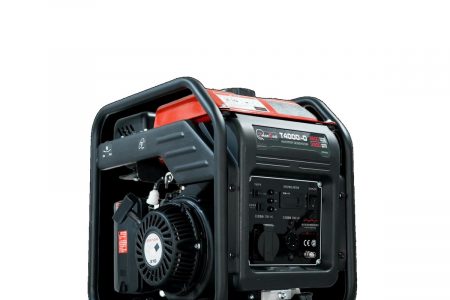 Gasoline Open
4.2 kW ≈ 4.2 kVA 230 V
Model T5500i-O · engine · 69 dB(A) at 7 m · 5 h at 50% load continuous running
Competitive export price · reply within 24 hours
View Details
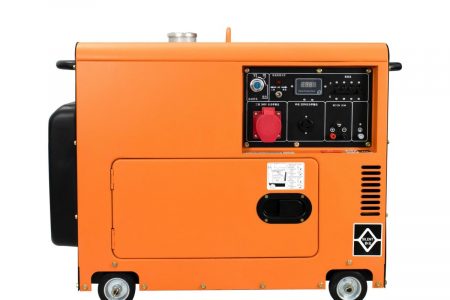 Silent Type
7 kW ≈ 8.8 kVA 220 V
Model 10000T · 192F engine · 72 dB(A) at 7 m · continuous running
Competitive export price · reply within 24 hours
View Details
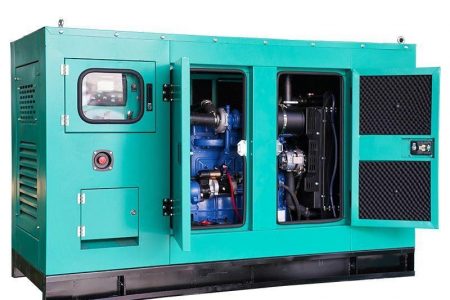 Silent Type
100 kW ≈ 125.0 kVA 220
Model T-100-X · engine · · continuous running
Competitive export price · reply within 24 hours
View Details